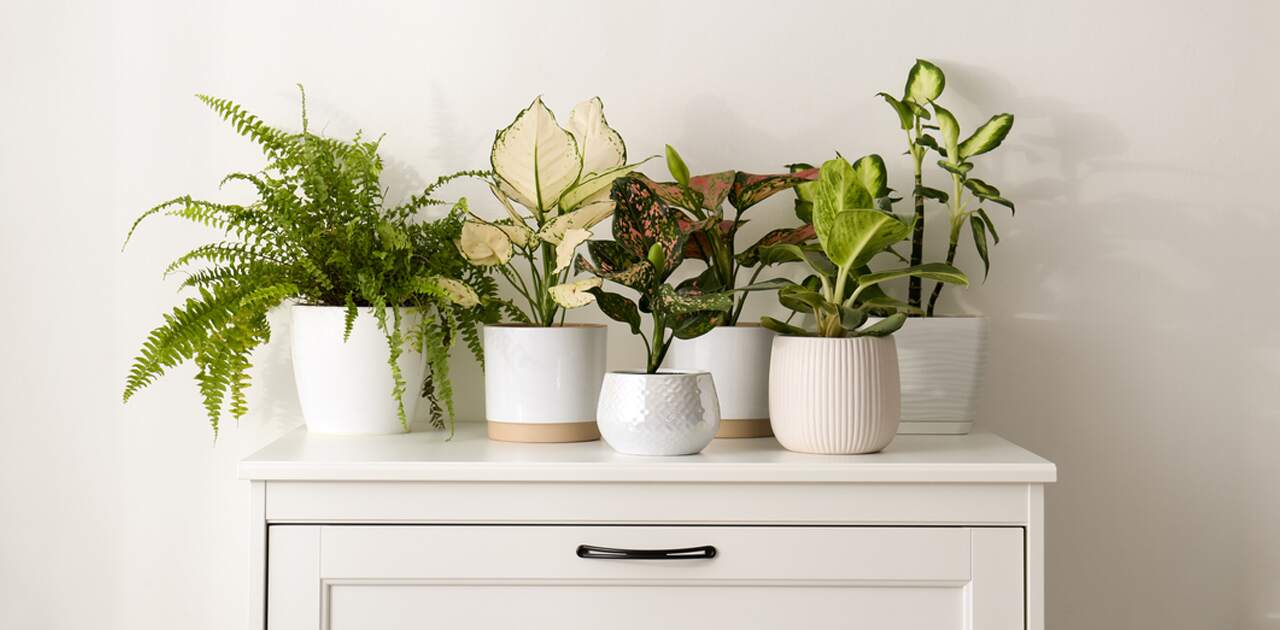
In their final report on “ Interior Landscape Plants for Indoor Air Pollution Abatement” released in September 1989, NASA advocated the fact that there needs to be at least one indoor plant per 100 sq. feet of area to keep the air clean.
Let’s assume you live in a 400 square feet apartment. Accordingly, you must keep at least 4 indoor plants to keep the surrounding air afresh. The same implies for offices too.
Now you must be wondering, which indoor plant should you choose for your home or office? How shall you identify, which plant is most suitable for your home or office keeping in mind the atmospheric conditions of your region?
To find better answer to such questions, we have enlisted 5 indoor plants below with in depth analysis of each one of them.
→ ZZ Plant (Zamioculcas zamiifolia)
ZZ plant is an evergreen plant native to Eastern Africa and it grows upto 3 feet tall. This plant is stemless and its leaves are generally glossy. Some of its varieties are variegated ZZ plants which are uncommon and mostly seen in nurseries. Raven or Black ZZ pants have dark foliage and are commonly seen in offices and big homes.
How is it advantageous to you ?
First and foremost, it works as an air purifier and removes harmful substances such as Toluene or Xylene from the air. Such toxic substances arise from emissions of petroleum from vehicles. So, if you live in an air polluted city, it can be of great help to you.
In extremely dry seasons, it can die back to its tubers and stay dormant for some time. But unlike other plants, it grows back again if watered properly and taken care of.
Moreover, this plant thrives amazingly well in low sunlight conditions. If you wish to keep an indoor plant in your living room, a ZZ can be a good choice.
→ Fiddle Leaf Fig (Ficus lyrata)
A Fiddle Leaf Fig plant consists of beautiful broad leaves which help in purification of air and is highly recommended for home and office use. Another benefit of Fiddle Leaf is that it is highly effective in reducing humidity. Permanent humidity may cause mold or other fungal problems indoor which can further lead to breathing problems for many individuals. Placing it at such places can prove fruitful for you.
This plant grows well in humid and warm conditions and it must be kept in direct exposure to the sun. Keep it near the window and you shall observe it’s true nature.
→ Devil’s Ivy (Pothos)
Devil’s Ivy, also known as a money plant, is believed to bring good fortune to the owner of the house. It’s leaves are usually thick, round and dark green. It purifies the air and increases the oxygen inflow in the surroundings.
A special characteristic of this plant is that it can grow in a water filled container without any soil provided water is changed regularly. Although, it can grow in a variety of light conditions but exposure to partial or indirect sunlight is advisable.
It has been scientifically proven that Pothos plant acts as an anti radiator for mobile phones, televisions and other electronic devices which emit harmful radiations. It helps in reducing stress , anxiety and sleeping disorders and brings healthy lifestyle.
→ Monstera (Monstera adansonii)
This plant has a unique texture where its leaves naturally grow in cut shape. It is an air purifier. Also, it efficiently removes formaldehyde which originally comes from wooden furniture. Soil is often layered with moss on top to keep it moist. Watering it every 2 to 3 days in summers is considered ideal for its growth.
It should be kept in a well lit space but away from direct exposure to the sunlight.
Due to its fascinating texture, it is also used for decorative purposes in homes and offices.
→ Lucky bamboo (Dracaena sanderiana)
According to Feng Shui practices, It is believed that if you receive this plant as a gift, good fortune and prosperity arrive at your door. Lucky bamboo plants signify the five major elements of life and they are earth, air, fire, water and metal and that is why it is believed that it brings stability wherever it is kept. It survives in any light conditions and is also used for home decor purposes.